This month, the team meets with Selin Pedrosa, Global Strategic Sales Manager, Drilling Services at Baker Hughes. Read on as she reflects on a recent geothermal energy project.
A decade ago, when I joined Baker Hughes in Türkiye, my very first assignment was in a geothermal drilling site. That early experience created a lasting connection, and over the years I've had the opportunity to involve in geothermal projects globally. What has been most striking is how differently Türkiye's story has unfolded compared with much of the rest of the world. While geothermal development has progressed slowly in many regions, Türkiye has achieved a remarkable acceleration, recording roughly a 10.5% compound annual growth rate between 2010 and 2024 and rising to fourth place globally in geothermal power generation. Beyond power generation, the country is also a global leader in direct geothermal applications, spanning district heating, greenhouse agriculture, and industrial applications.
This rapid progress raises an important question: how did an emerging market manage to unlock its geothermal potential so quickly, at a time when global deployment has been far more gradual?
Over the past year, together with my co-authors Osamah Al-Momen and Majed ALSUWAILEM,we set out to explore the factors behind this success. The result of that work is our recent paper published by KAPSARC, Geothermal Market Growth in Türkiye: Policy and Legislative Insights for New Market Entrants.
This paper highlights why geothermal scaled rapidly in Türkiye, why the model is now under strain, and why future growth will require more than resource availability.
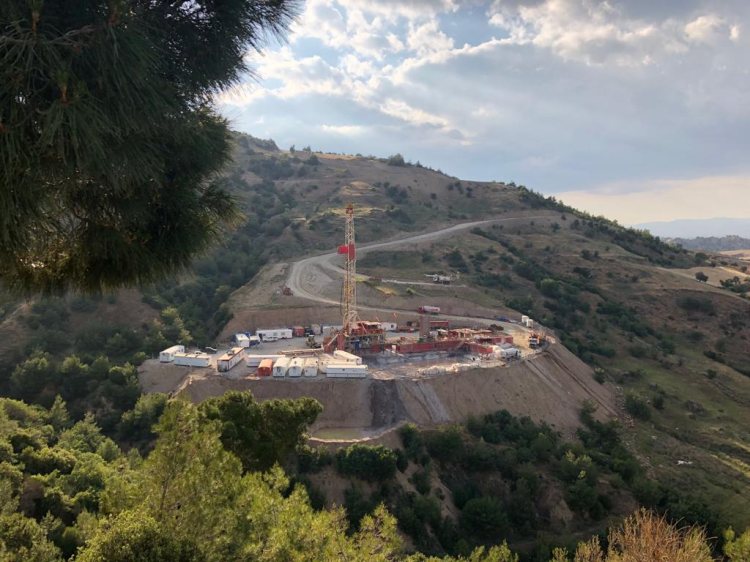
Geothermal energy facility
Why geothermal scaled so quickly?
Despite being endowed with one of the most productive geothermal systems globally, geothermal energy in Türkiye did not emerge overnight. For much of the twentieth century, Türkiye prioritized large hydropower projects, while geothermal remained underdeveloped. The turning point came after 2001, when the country undertook market reforms that liberalized the electricity sector and opened generation to private investment.
One of the most important catalysts was the Renewable Energy Resources Support Mechanism (YEKDEM). Introduced in 2011, this framework offered long-term feed-in tariffs that reduced revenue risk for renewable energy projects. For geothermal developers who face high upfront costs and long development timelines this policy certainly proved decisive. Drilling activity accelerated, private capital entered the market, and installed capacity expanded rapidly throughout the 2010s.
Equally important was the role of the General Directorate of Mineral Research and Exploration (MTA). Decades of publicly funded exploration efforts significantly reduced subsurface uncertainty. When the Geothermal Law was enacted in 2007, many of these pre-explored fields were auctioned to private developers, lowering entry barriers in a sector where exploration risk is often prohibitive. This public-private sequencing remains one of Türkiye's most distinctive geothermal advantages and is examined in detail in the full article.
Financing and technology spillovers
Geothermal projects are capital-intensive, with drilling typically representing more than half of total project costs. In Türkiye's geothermal development, this financial burden was mitigated mainly through strong engagement with multilateral financial institutions most notably the World Bank and the European Bank for Reconstruction and Development complemented by financing from Türkiye Kalkınma Bankası and other domestic financial institutions. Their involvement through concessional lending, long-tenor financing, and project-level support played a decisive role in mobilizing private capital.
At the same time, Türkiye benefited from deep technical spillovers from its oil and gas sector. The sector quickly adopted the know-how and fit-to-purpose technologies from oil and gas, enabling enhanced drilling efficiency. As a result, geothermal well construction costs in Türkiye remain among the lowest worldwide due to enhanced drilling efficiency, providing the country with a lasting cost advantage that is examined in detail within the paper.
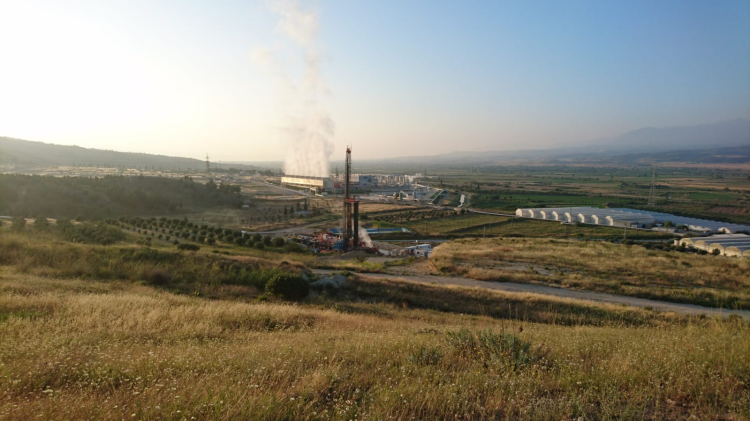
Example of geothermal energy facility
Structural challenges beneath the success
Despite impressive growth, Türkiye's geothermal sector now faces structural constraints. Development has heavily concentrated in western Anatolia, while central and eastern regions remain largely untapped. Since 2018, new exploration has slowed due to economic pressures, currency volatility, evolving incentive structures, and competition for drilling resources from the oil and gas industry.
More critically, geothermal licensing has often treated reservoirs as fragmented assets rather than integrated systems. Multiple operators producing from the same reservoir without coordinated management have led to pressure interference, declining productivity, and oversized power plants. Nearly a quarter of installed geothermal capacity is estimated to be underutilized as a result. These technical and governance challenges are explored extensively in the full paper.
Looking ahead
Türkiye's geothermal story demonstrates how geology, policy, finance, and technology can align to deliver large-scale renewable energy. Yet it also shows that early success does not guarantee long-term sustainability. Future growth will depend on regulatory refinement, reservoir-based governance, renewed exploration incentives, and financial frameworks that reflect geothermal's long investment horizon.
The full paper expands on these themes with detailed data, policy analysis, and case studies. For countries considering geothermal development or investors assessing frontier markets Türkiye offers both a compelling success story and a set of hard-earned lessons beneath the surface.
I would also like to sincerely thank Baker Hughes Geothermal and KAPSARC for their support in making this work possible, and to everyone who contributed, reviewed, debated, and encouraged along the way. This paper reflects a truly collaborative effort, and I appreciate every conversation and challenge that helped shape it.
By: Selin Pedrosa, Global Strategic Sales Manager, Drilling Services
BIO
Selin has a strong technical background in Well Construction and diverse experience in the energy sector. Skilled in managing complex challenges with limited resources and delivering innovative solutions. Successfully led various projects, consistently exceeding expectations.