At a glance
- OPG is advancing fish habitat enhancement on the Wanapitei River as part of the Coniston and Stinson GS Redevelopment Project, which will modernize both hydro facilities and secure enough clean, reliable energy to power about 12,000 homes for decades to come.
- Following site visits and discussions with Indigenous communities, fish habitat cribs have been identified as the preferred enhancement approach.
- Indigenous engagement remains central to the project, with ongoing collaboration with Wahnapitae and Atikameksheng Anishnawbek First Nations.
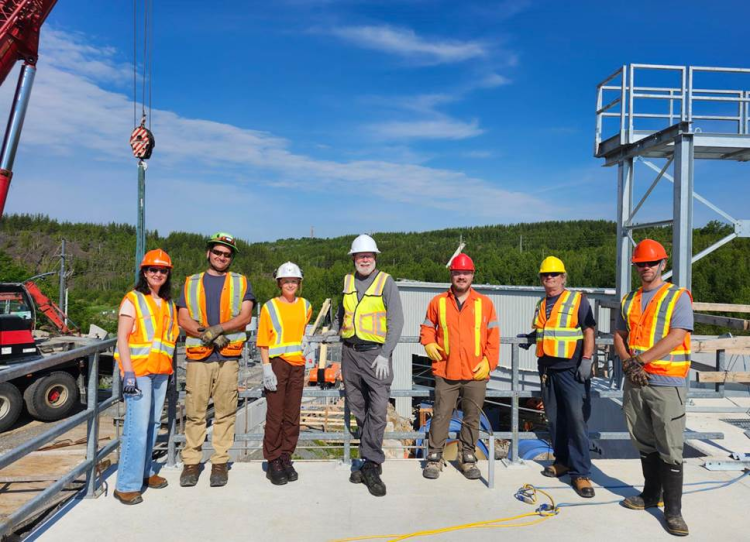
From left to right: OPG's Wendy Cudmore and Jordon Templeton join Kelsey-Lyn Roy from Atikamesksheng First Nation, Cam Portt from Cam Portt and Associates, Robert Paishegwon from Atikamesksheng First Nation, Alsid Bonhomme, an elder with Atikamesksheng First Nation, and Joe Bienentreu from Wahnapitae First Nation for a site visit.
In northeast Ontario, OPG is redeveloping two of its oldest hydroelectric stations while working with Indigenous communities to support fish habitat along the Wanapitei River.
The 121-year-old Coniston and 101-year-old Stinson Generating Stations (GS) near Sudbury are being modernized to help provide 12 MW of clean, reliable power for decades to come.
The redevelopment of Coniston and Stinson will include replacing the powerhouses at both sites, installing two modern turbine generators at each station, and adding new mechanical and electrical systems.
As part of the work, OPG's Indigenous Working Group recently visited sites upstream of Stinson GS with representatives from Wahnapitae and Atikameksheng Anishnawbek First Nations to explore fish habitat enhancement opportunities.
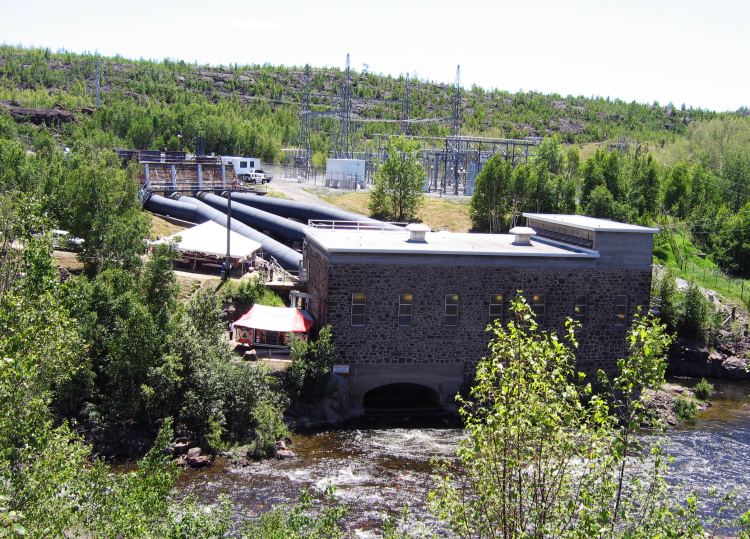
OPG's 120-year-old Coniston Generating Station (GS) is situated east of Sudbury.
The group considered several restoration options, including spawning habitat, artificial reefs, shoreline revegetation and reconnecting waterways. Fish habitat cribs artificial structures that create shelter and habitat for fish were identified as the preferred approach. The work could also provide a meaningful opportunity for community involvement.
Ongoing engagement remains central to the projects. OPG meets weekly with both communities, while land guardians visit the sites every two weeks and share observations from the field.
During the visit, the group also observed local wildlife and heard stories from Al, an Elder, about fishing on the waterway, including memories of catching large walleye.
The team is aiming to finalize enhancement specifications this fall, with implementation anticipated as a community initiative in winter 2027 or 2028.